

Cash Flow vs. Profit: Why Your Reports Say You’re Profitable But Your Bank Account is Empty
You just finished reviewing your profit and loss statement, and everything looks great. Your business is profitable. The numbers are solid. You’re celebrating…until you check your bank account and realize you can’t make payroll next week.
Welcome to one of the most confusing (and stressful) realities of running a small business: you can be profitable on paper while being broke in reality. If you’ve ever experienced this head-scratching contradiction, you’re not alone. Let’s break down why this happens and what you can actually do about it.
The Core Problem: Accrual vs. Cash Accounting
The disconnect between profit and cash comes down to one fundamental difference: how your financial reporting measures money.
Most businesses use accrual accounting, which means you record revenue when you earn it, not when you actually get paid. So when you send that $10,000 invoice to a client? Your books immediately show that as revenue and profit, even though the client has 30, 60, or sometimes 90 days to pay you.
On the flip side, cash flow reflects the actual movement of money. It’s the dollars coming into your account versus the dollars going out. Your cash flow statement doesn’t care about what you “earned” last month. It only cares about what’s actually sitting in your bank account right now.
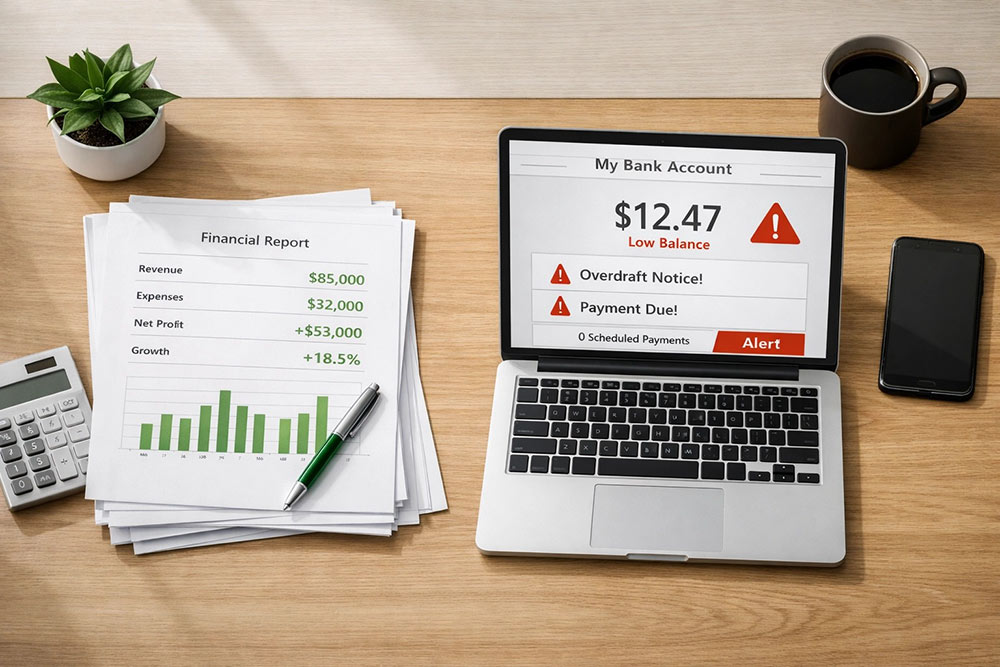
This timing difference creates a gap, sometimes a massive one, between what your profit and loss statement tells you and what your bank balance shows you.
Why Your Profitable Business Is Running Out of Cash
1. Your Customers Aren’t Paying You Fast Enough
This is the number one culprit. You make a sale, record the revenue, and your income statement shows a profit. But if your client takes 45 days to pay, that cash isn’t available to cover this week’s expenses.
Let’s say you run a marketing agency in Manhattan. You bill a client $15,000 for a project you completed in January. Your books show that $15,000 as January revenue. But the client pays you in March. Meanwhile, you still had to pay your team, your rent, and your software subscriptions in January and February, out of whatever cash you actually had on hand.
This accounts receivable lag is a silent killer for profitable businesses. Your financial reporting shows you’re making money, but your cash flow analysis reveals you’re underwater.
2. You’re Paying Your Bills Faster Than You’re Getting Paid
Here’s the flip side: while your customers are taking their sweet time paying you, your vendors and suppliers expect payment now. Your landlord doesn’t accept “accounts receivable” as rent payment. Your employees can’t deposit “future profits” into their bank accounts.
This creates a cash flow crunch where money is flowing out faster than it’s flowing in, even though your accounting shows you’re profitable.
3. You Made Big Investments
Maybe you bought new equipment, invested in inventory, or hired additional staff. These are smart business moves that help you grow, but they also require significant upfront cash. Here’s where bookkeeping and accounting get tricky: some of these costs don’t immediately hit your profit and loss statement as expenses. Equipment gets depreciated over time. Inventory only becomes an expense when you sell it. But you paid cash for these things today.

So your profit looks healthy because those expenses are being spread out over months or years, but your bank account took an immediate hit.
4. Non-Cash Items Are Messing With Your Perception
Depreciation is a perfect example. Let’s say you bought a $30,000 vehicle for your Brooklyn-based business. You might depreciate that over five years, which means only $6,000 per year shows up as an expense on your profit and loss statement.
But you paid $30,000 upfront (or you’re making loan payments that include principal, which also isn’t an “expense” on your P&L). Your reported profit doesn’t reflect this actual cash outflow.
Why Cash Flow Actually Matters More Than Profit (for Now)
Here’s the hard truth: you can survive being unprofitable for a while, but you can’t survive being cash-poor for even a short time.
Profit is a long-term health indicator. It tells you whether your business model is sustainable, whether you’re pricing correctly, and whether you’re ultimately building equity in your business.
But cash flow? Cash flow determines whether you can keep the lights on this week. It determines whether you can make payroll on Friday. It determines whether you can take advantage of that great deal from a supplier who needs payment in 10 days.
For NYC small business owners especially, where rent is high, competition is fierce, and expenses come fast, positive cash flow is your lifeline. Financial reporting might say you’re profitable, but if your cash flow analysis shows you’re running dry, you have a problem that needs immediate attention.
How to Manage Both Profit and Cash Flow
Get Serious About Accounts Receivable
Invoice promptly. Like, the same day you complete work. Set clear payment terms (net 15 or net 30, not “whenever”). Follow up on overdue invoices aggressively. Consider offering small discounts for early payment.
Some of our clients have cut their average collection time in half just by tightening up their invoicing process and actually following up with customers who are past due.
Watch Your Accounts Payable (Without Damaging Relationships)
Take advantage of payment terms your vendors offer. If they give you 30 days, use the 30 days (but don’t abuse it). This helps you hold onto cash longer and match your outflows with your inflows.
Just don’t play games that damage your vendor relationships: you need those partnerships for the long haul.
Run Cash Flow Projections
This is where proper bookkeeping becomes essential. You need to know what’s coming in and going out over the next 30, 60, and 90 days. A simple cash flow projection spreadsheet can help you spot crunches before they become crises.
Look at your accounts receivable aging report. Which clients owe you money, and when should you expect payment? Match that against your upcoming expenses.
Build a Cash Reserve
I know, easier said than done. But even a modest cash cushion: enough to cover a month of operating expenses: can be the difference between weathering a slow payment cycle and scrambling to make payroll.

Review Both Reports Regularly
Don’t just look at your profit and loss statement during tax season. Review your P&L monthly, and review your cash flow statement just as often. They tell different but equally important stories about your business health.
The Bottom Line
Understanding the difference between profit and cash flow isn’t just accounting nerdery: it’s essential business intelligence. Your financial reporting might show profit, but your cash flow analysis shows reality.
The good news? Once you understand this disconnect, you can manage both effectively. You can be profitable and cash-positive. You can grow your business without the constant stress of wondering if you can cover next week’s expenses.
But it requires attention, proper bookkeeping, and often professional help to get your systems in order. The businesses that thrive aren’t just the ones making money on paper: they’re the ones who’ve mastered the timing of that money flowing through their accounts.
If you’re struggling to reconcile your “profitable” reports with your empty bank account, it might be time to get your books cleaned up and implement better cash flow tracking systems. Reach out to our team: we help NYC business owners make sense of their numbers and build systems that support both profitability and healthy cash flow.
Because at the end of the day, you can’t deposit profit into your bank account. But you can deposit cash.